 Subscribe


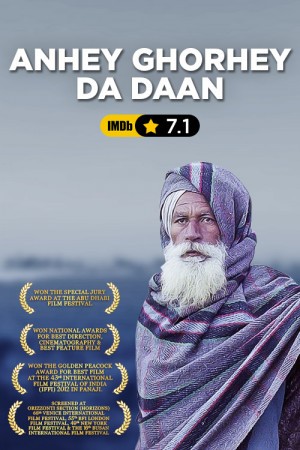
This film captures the long-standing subjugation of struggling classes, reflecting their simmering unrest, silenced voices seeking unity, and the awakening of raw desire and the first stirrings of love amidst oppression and yearning for change.

Set in post-colonial India, Qissa tells the story of Umber Singh, a Sikh, who is forced to flee his village due to ethnic cleansing at the time of Partition in 1947. Umber decides to fight fate and builds a new home for his family. When Umber marries his youngest child Kanwar to Neeli, a girl of lower caste, the family is faced with the truth of their identities; where individual ambitions and destinies collide in a struggle with eternity.

"Thola, a sharecropper, was treated as a brother by the landlord, whose son Dharam Singh calls him uncle. Thola had married a nomad girl who was consequently forsaken by her parents. As a penance, Thola’s son Jagsir is condemned to remain unmarried. Jagsir falls in love with Bhani, the young bride of the local barber. Bhani too reciprocates the feeling and is punished by being sent away. When Thola dies, Jagsir builds a brick memorial, a marhi, on the land he used to till. Dharam Singh’s son Bhanta, resents the unofficial tenancy rights of Jagsir. Missing Bhani, Jagsir becomes addicted to opium. Unable to battle with Bhanta, he does not till the land. Bhanta breaks Thola’s marhi, and takes over the land given to Thola by his grandfather. Jagsir’s mother dies of shock and Jagsir starves himself to death. His friend, the water-carrier Ronki, builds his marhi in his memory, and Bhani lights the earthen lamp on it."